
Overcoming sensory challenges takes persistence

Functional communication is key to self-advocacy
October 16, 2024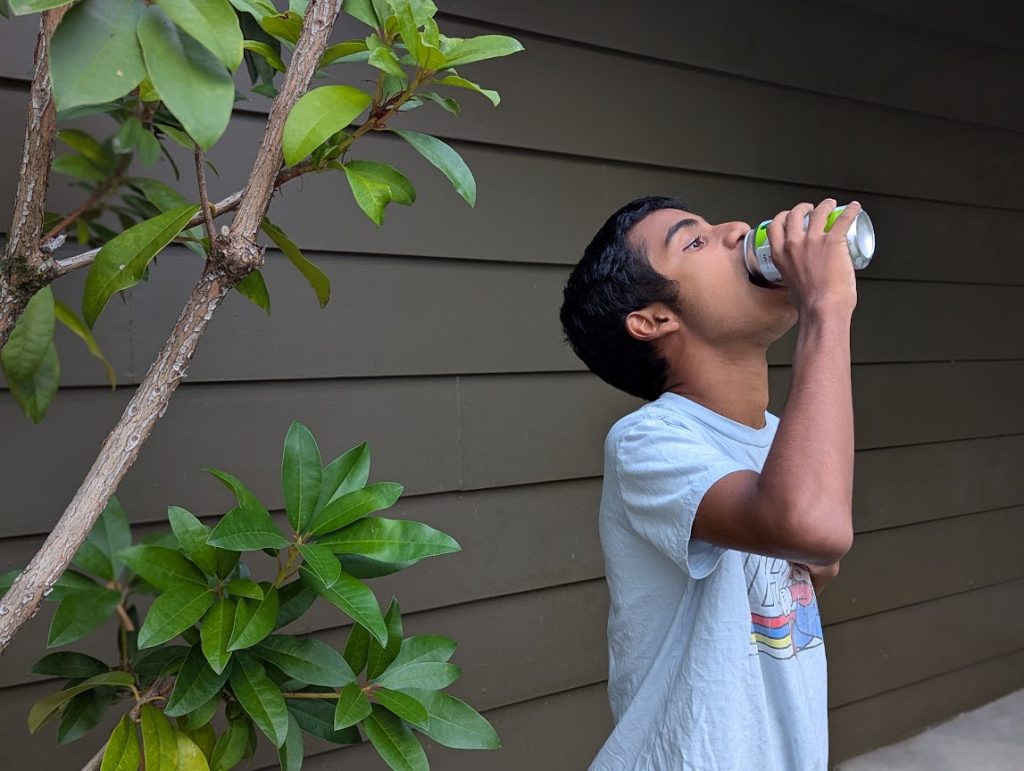
Imagine you are at your favorite Pizza place with the family. You order their favorite pizzas, and some cans of soda. Everyone is in a good mood, conversations are starting to form, with the smell of dough wafting in the air. Your kid on the spectrum is visibly happy — he loves this pizza place, partly because he also gets to drink his favorite soda, Sprite. He has the can in his hand, loudly calls out “help please”, which is great — he has been practicing to ask for help. He hates the feeling of sharp objects on his skin. Without thinking twice, you open the can for your kid, and enjoy the evening. Totally normal. What if we say, such “positive moments” could be great opportunities to tackle some pesky sensory challenges? Seems like we are potentially ruining a great moment — but it may turn out otherwise. Read on.
. . .
Fact 1 — A special needs “family moment” is typically different from a neurotypical family’s. Yes, we all go out and enjoy pizza at the same place, but the experience is different. Without even consciously thinking, we look for that quiet corner, get extra tissues, spot the bathroom, you know what I mean. This is not right or wrong, it just is.
Fact 2 — Kids on the autism spectrum can learn skills. Period. They just learn differently. It needs a lot of creativity, attention to detail and “thinking from their perspective” to find the right way to facilitate that learning, or behavior change. And it may need a lot of repetition.
Fact 3 — Like it or not, it seems like the family is in “learning mode” most of the time! If there is an opportunity, we try to jump on it — think about antecedants, positive/negative reinforcements, keep track of data — the works. This is exhausting!
Manu hates getting hair cuts, nail cuts, massages when he is sore etc. Just any extra pressure on his skin is not tolerated well. Of course, the problem is personal hygiene and safety. Long nails sometimes scratch people next to him. Long and unruly hair or a long nail bothers him, although he doesn’t want to cut it. We tried several techniques, several providers — but were not making progress. It is during this time, that we went to a pizza place.
. . .
Long story short, when Manu asked us to open the tab of the soda can — we thought it may be an opportunity to learn that sharp-object-on-skin may be OK, since he loves drinking Sprite. Through trial and error we found that if we add a tissue in the mix — the feel of tissue dulls the feel of metal. First few times, nothing happened — although he was unhappy, he didn’t explode. This gave us confidence to keep trying whenever we got the chance. We started trying at pizza places, at home, at Whole Foods — yeah, Manu got to drink Sprite more. In a few weeks, he started opening the can a little bit. The one day at home, he opened it half way. We kept trying. If he tried to open it with his mouth, we redirected. We always opened it within a few minutes, so he doesn’t get very frustrated. In around 3 months, of such trying, he was able to open a can himself, without too much fuss! We didn’t “plan for this”, it just happened. Technically, this involves the following.
- Systematic densitization — Begin with a low-intensity version of the aversive stimulus (in this case, the sensation of the can tab against the skin) and gradually increase exposure over time. Pair each step with access to something preferred so the learner can build tolerance without being overwhelmed.
- Natural Reinforcement (Positive Reinforcement) — The soda itself serves as the natural reinforcer, since Manu only gets to drink it once the can is opened. Early attempts can be encouraged with praise or small prompts, but the real payoff (Sprite) comes after completing the step, making the skill both functional and motivating.
- Shaping — Successive approximations are reinforced systematically: first touching the can tab, then sliding a finger underneath, then applying upward pressure, and eventually completing the full motion of opening the can. Each step in the chain is acknowledged and reinforced until the target behavior is mastered.
. . .
Overcoming sensory challenges takes persistence, flexibility, and yes — a good dose of creativity, because you never know when the right learning opportunity will present itself. Today, when we see Manu casually pop open a soda can (still needs an initial push), it feels like a small but meaningful victory. Even better, he’s beginning to tolerate cutting nails, which we hope will pave the way for other daily routines that will need sensory tolerance. Although these are small wins, they are powerful reminders that progress often comes in everyday moments, one soda can at a time.


